
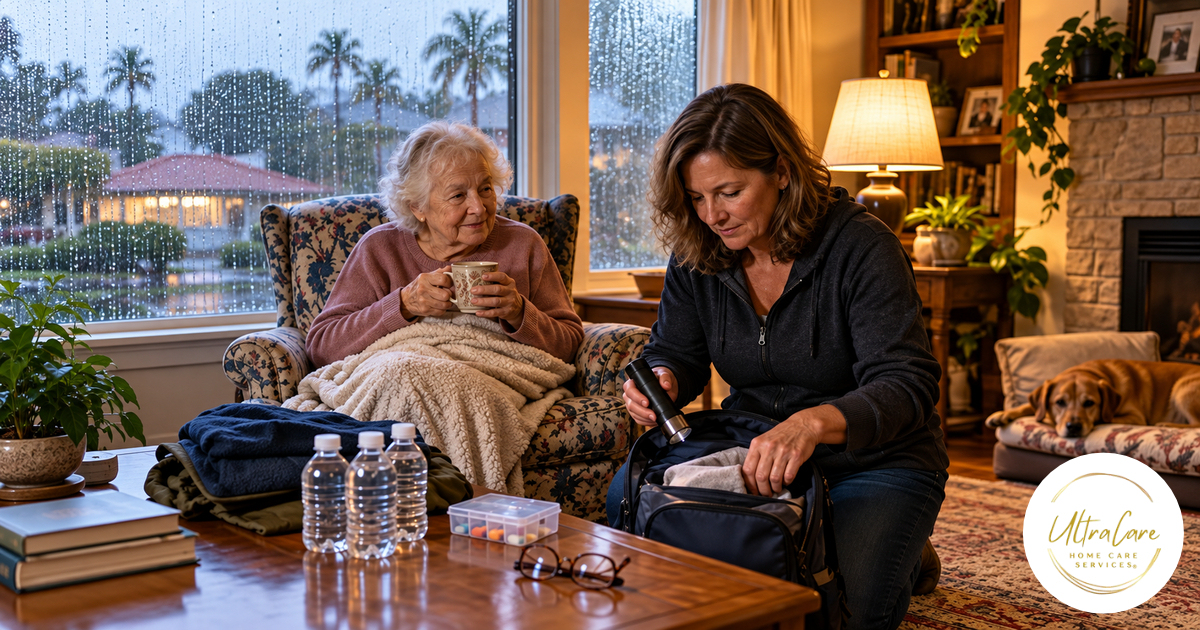
7 Critical Steps Southern California Families Should Take Before Severe Weather Arrives
By Leslee Deanes-Bryant | Founder & CEO, UltraCare Services® | The Care Mogul
When severe weather threatens Southern California, most families think about protecting their homes. But who’s protecting the aging parent inside?
A flooded street, power outage, missed caregiver shift, or disrupted medication routine can quickly turn into a dangerous situation for an older adult.
The storm doesn’t have to reach your front door to disrupt your loved one’s care.
As a home-care CEO, I’ve seen how important it is to prepare before a disruption becomes a crisis. I call that vulnerable space between recognizing a problem and taking action The Crisis Gap™.
Here are seven steps every family should consider.
1. Have a backup plan for your caregiver.
If flooded streets prevent your caregiver from arriving, who steps in? Identify at least two backup contacts and discuss contingency arrangements with your home-care agency before severe weather arrives.
2. Prepare for a power outage.
If your loved one depends on oxygen equipment, powered mobility devices, or refrigerated medication, contact their healthcare provider and equipment supplier about safe backup arrangements. Don’t wait until the lights go out.
3. Protect older adults living with dementia.
Storms, unfamiliar environments, and disrupted routines can increase confusion and distress. Prepare familiar comfort items, emergency identification, calming strategies, and a supervision plan if evacuation becomes necessary.
4. Pack a senior-specific emergency bag.
Include medication information, essential supplies, copies of important documents, glasses, hearing-aid batteries, mobility essentials, and emergency contacts. Ask the pharmacist about obtaining an emergency medication supply.
5. Create an evacuation plan that accounts for mobility.
Knowing where to go isn’t enough. Families must determine how their loved one will safely leave the home, who can assist, and whether accessible transportation will be needed.
6. Establish a family communication chain.
For the sandwich generation, caring for children and aging parents during an emergency can become overwhelming. Designate who checks on your parent, who contacts the caregiver, and who coordinates decisions if communication fails.
7. Take the 72-Hour Care Continuity Test
Ask yourself: If my parent’s normal care routine were interrupted for 72 hours, would they have the people, supplies, information, and support needed to remain safe?
If you don’t know the answer, it’s time to strengthen the plan.
The Care Mogul’s Final Word
We cannot control the storm. But we can prepare for what happens when the systems our aging loved ones depend on are interrupted.
Because protecting an aging parent isn’t just about responding to an emergency. It’s about anticipating the risks before the emergency begins.
Need help building a backup care plan for your parent? UltraCare Home Care Services supports families in Hawthorne and throughout Los Angeles County with dementia care, 24-hour care, and more. Call (310) 691-8161 or schedule a free consultation.